

Choosing a kindergarten is an important decision for families because early education can shape how children approach learning, communication, and social development. For families seeking a more globally focused educational environment, an international kindergarten can offer a distinctive alternative to a traditional early childhood program.
These schools often combine early childhood education with multilingual learning, international teaching methods, and exposure to different cultures. While programs can vary significantly from one school to another, many international kindergartens share a focus on helping young children become confident, curious, and comfortable in diverse environments.
Understanding the International Kindergarten Model
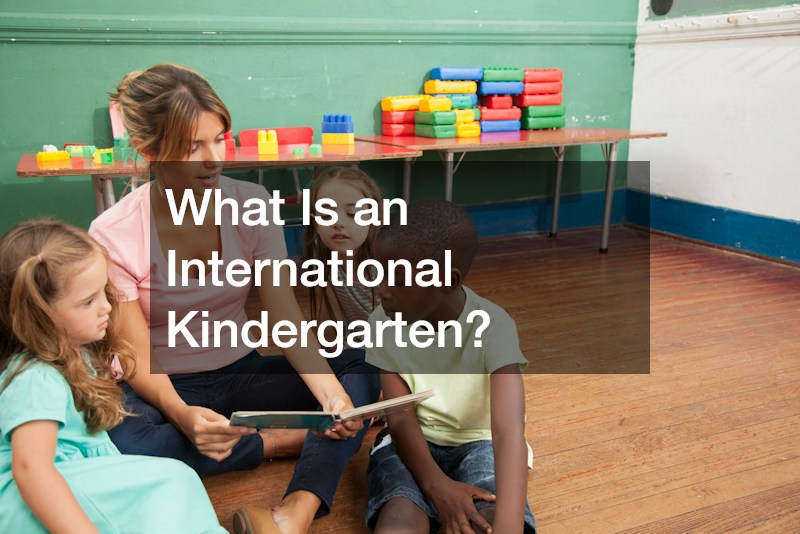
An international kindergarten is an early childhood education program designed around a globally oriented curriculum or learning philosophy. These schools may serve local families, expatriate families, or a combination of both.
Rather than focusing exclusively on one country’s educational system, an international program may incorporate teaching approaches, educational standards, and cultural perspectives from multiple regions.
Some schools follow established international curricula, while others develop their own programs using elements from several educational systems. The specific structure depends on the school, its location, and the ages of the children it serves.
Multilingual Learning Is Often a Major Focus
One of the most recognizable features of many international kindergarten programs is exposure to multiple languages.
English is commonly used as a primary or secondary language in international schools, although the languages offered depend on the school and region. Children may learn through a bilingual environment in which teachers use two languages throughout the day.
At this age, language learning may happen naturally through songs, stories, classroom conversations, games, and everyday routines rather than through formal lessons alone.
A multilingual international kindergarten can give children frequent opportunities to hear and use another language while interacting with classmates and teachers.
Children Are Exposed to Different Cultures
International education is not only about language. Many programs also introduce children to traditions, celebrations, stories, music, food, and customs from different parts of the world.
Classrooms may include students from a wide range of backgrounds, giving children daily opportunities to interact with people whose experiences may be different from their own.
Teachers can use these differences as part of the learning experience. For example, classroom activities may involve exploring holidays from around the world, reading stories from different cultures, or learning about countries represented by classmates.
This environment can help children develop curiosity and respect for different perspectives at an early age.
Learning Is Often Play-Based
Although individual schools use different teaching methods, many international kindergarten programs emphasize play-based and hands-on learning.
Instead of spending most of the day completing worksheets, children may learn through building, drawing, imaginative play, music, movement, storytelling, experiments, and group activities.
Play can support several areas of development at once. Building with blocks, for example, can introduce early math and problem-solving skills while also encouraging creativity and cooperation.
An international kindergarten may also use project-based learning, allowing children to explore a topic through several connected activities over an extended period.
Social and Emotional Development Matters
Academic preparation is only one part of kindergarten. Young children are also learning how to communicate, make friends, follow routines, manage emotions, and resolve disagreements.
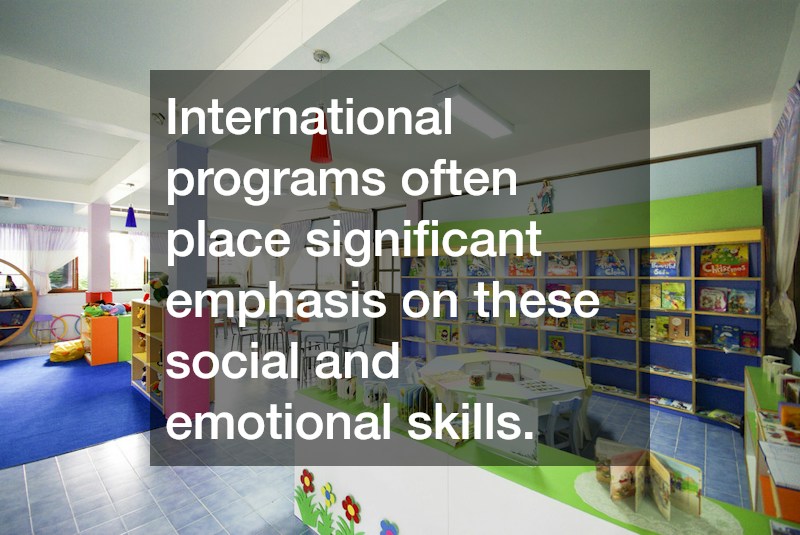
International programs often place significant emphasis on these social and emotional skills.
Group projects and classroom activities can encourage children to cooperate with classmates, listen to other ideas, and communicate their own thoughts. Teachers may also help students practice independence by completing age-appropriate tasks on their own.
These experiences can become especially valuable in a diverse classroom where children are regularly interacting with different personalities, languages, and cultural backgrounds.
International Programs Can Prepare Children for Future Schooling
Some families choose international education because they expect to move between countries or want their children to eventually attend an international elementary or secondary school.
An internationally focused kindergarten can help provide continuity for families whose children may later enter similar educational systems.
Students may become familiar with classroom expectations, instructional styles, and language environments commonly found in international schools.
However, parents should examine the curriculum carefully. The term international kindergarten can describe many different educational approaches, so families should not assume that every program follows the same academic standards.
Classrooms May Be Highly Diverse
A diverse student body is another common feature of international schools.
Children may have classmates whose families come from several different countries or speak different languages at home. In some programs, teachers themselves may have international educational or professional backgrounds.
This diversity can create an environment where differences are a normal part of everyday classroom life.
Children may learn that there are many ways to communicate, celebrate traditions, eat meals, or experience family life. These everyday interactions can provide meaningful lessons that would be difficult to reproduce through textbooks alone.
What Should Parents Look for in a Program?
Families considering an international program should look beyond the school’s name and learn how its classrooms actually operate.
Parents may want to ask about the curriculum, teacher qualifications, class sizes, language instruction, daily schedules, safety procedures, communication with families, and expectations for student development.
It can also be helpful to visit the school when possible. Observing a classroom can provide a better sense of how teachers interact with students and whether children appear comfortable, engaged, and supported.
Parents should also consider how well the program matches their child’s personality and learning needs. A highly structured environment may work well for one child, while another may thrive in a more exploratory setting.
A Global Approach to Early Childhood Education
An international kindergarten generally combines early childhood development with a broader global perspective. Children may encounter multiple languages, diverse cultures, collaborative learning, and educational methods influenced by different parts of the world.
The right program can provide children with a supportive environment in which they build academic foundations while also developing communication, independence, creativity, and social skills.
Ultimately, families should compare individual schools carefully rather than choosing based on the international label alone. Understanding the curriculum, teaching philosophy, classroom environment, and language program can help parents find a kindergarten that supports both their child’s immediate development and future educational goals.